Every beauty salon and dermatology clinic faces two universal operational pressures: calming post-procedure redness quickly after extractions, peels, or RF sessions, and generating profitable revenue without tying up an esthetician’s hands for 30 extra minutes. High-output 415nm 633nm 830nm medical LED photobiomodulation and ALA-PDT panels solve both problems effortlessly—accelerating cellular ATP repair, clearing inflammatory acne bacteria, and running completely hands-free as a high-margin add-on or standalone membership station.
Clinical Engineering Callout: Why High-Irradiance Narrow-Band Medical LEDs Outperform Home Masks
Consumer silicone home masks deliver weak 5–15 mW/cm² power with wide spectral drift, failing to hit the Arndt-Schulz biphasic photobiomodulation threshold inside deep dermal mitochondria. Medical-grade canopy panels—engineered with precision Surface-Mount (SMD) medical LED arrays delivering 40–100+ mW/cm² tightly centered at 415 nm (±5 nm), 633 nm (±5 nm), and 830 nm (±5 nm)—saturate cytochrome c oxidase chromophores within 15–20 minutes, multiplying cellular ATP synthesis and cutting post-facial erythema recovery in half.
1. Photobiological Mechanisms of 415 nm, 633 nm & 830 nm Wavelengths
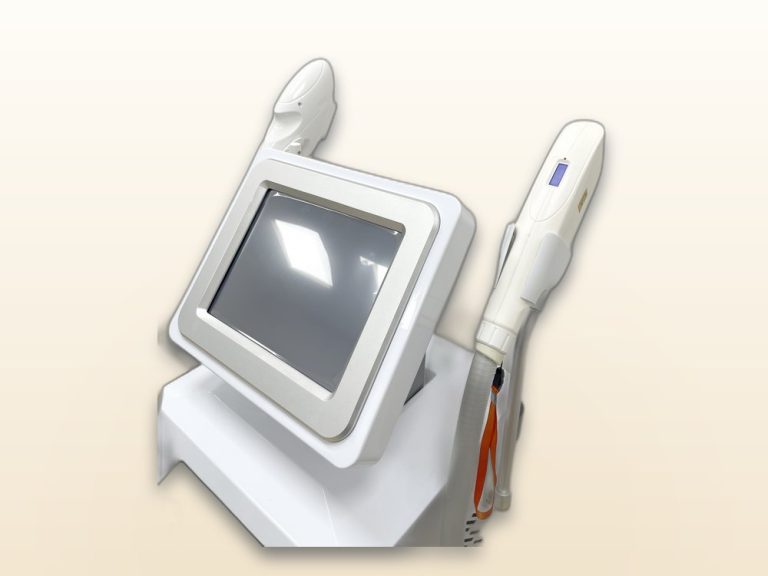
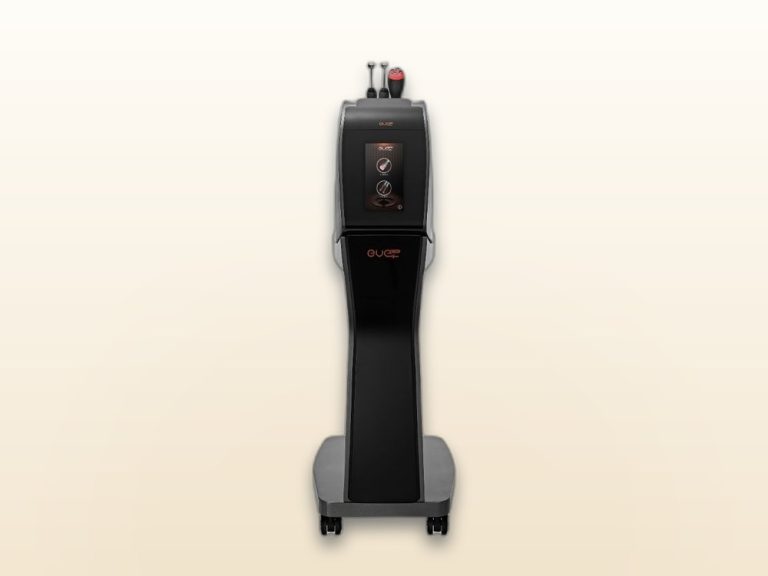
Photobiomodulation (PBM) operates purely non-thermally through photochemical photon absorption rather than tissue heating or ablation. Each calibrated wavelength on the VENUS Medical LED Phototherapy Panel and compact Mini T-Bio LED Photodynamic System penetrates to a distinct histological layer and triggers targeted cellular cascades:
- 415 nm Blue Light (Epidermal Antimicrobial & Sebum Control, 0.5–1.0 mm): Directly excites endogenous porphyrins (coproporphyrin III) accumulated inside Cutibacterium acnes bacteria, releasing reactive singlet oxygen that ruptures bacterial walls without inducing antibiotic resistance. Also normalizes hyperactive sebocytes when paired with topical 5-aminolevulinic acid (ALA-PDT).
- 633 nm Visible Red Light (Dermal Collagen & Microcirculation, 2.0–4.0 mm): Absorbed strongly by mitochondrial cytochrome c oxidase inside papillary and reticular fibroblasts, displacing inhibitory nitric oxide, surging ATP production, and upregulating pro-collagen Type I synthesis alongside VEGF-mediated wound healing.
- 830 nm Near-Infrared Invisible Light (Deep Mast-Cell Stabilization & Tissue Repair, 5.0–10.0+ mm): Penetrates effortlessly through epidermis and subcutis to quiet inflammatory cytokines (IL-1β, TNF-α), stabilize degranulating mast cells, relieve muscular joint soreness, and dramatically calm redness after lasers, chemical peels, or microneedling.
2. Clinical Wavelength & Dose Matrix Across Salon & Medspa Protocols
Optimize irradiance distance, exposure duration, and wavelength combinations across five core treatment room workflows:
| Indication / Salon Goal | Active Wavelengths | Session Time & Distance | Biological Target & Endpoint | Recommended Cadence |
|---|---|---|---|---|
| Active Inflammatory Acne | 415 nm + 633 nm (or 415 nm + 830 nm) | 20 min at 8–12 cm from face | Porphyrin bacterial kill + anti-inflammatory calming | 2x weekly for 4–6 weeks |
| ALA-PDT Severe Cystic Acne | 633 nm High-Intensity Red (or 415 nm) | 20 min after 30–60 min ALA incubation | Targeted sebaceous gland photodynamic destruction | Every 2–4 weeks (2–3 sessions) |
| Post-Extraction / Post-Laser Recovery | 633 nm + 830 nm Dual Sync | 15–20 min immediately post-service | Downregulates mast-cell erythema & speeds barrier repair | Every facial/laser visit |
| Anti-Aging & Photoaging Glow | 633 nm + 830 nm (optional 590 nm yellow) | 20 min over hydrating peptide mask | Mitochondrial ATP surge + fibroblast collagen boosting | 1–2x weekly maintenance |
| Scalp Hair Vitality & Follicle Support | 633 nm + 830 nm Canopy | 20–25 min over clean parted scalp | Extends anagen phase & boosts perifollicular blood flow | 2x weekly (12-week program) |
3. Hands-Free Salon Economics: Turning Empty Bed Minutes Into Passive Profit
Labor payroll represents the single largest overhead cost inside modern beauty salons and skin studios. Whenever an esthetician spends 20 minutes manually massaging or holding a wand, that room generates labor-bound revenue. By placing a client comfortably under an articulated 415nm 633nm 830nm medical LED photobiomodulation canopy while a chilled hyaluronic sheet mask or recovery hydrogel sits on their skin, the esthetician is free to sanitize tools, restock trays, consult the next client, or turn over a second treatment room.
With zero disposable bulbs (medical LED arrays run 30,000–50,000 hours with virtually zero power draw), adding a $35–$55 “LED Recovery Boost” onto every hydra-dermabrasion, extraction facial, or waxing session yields pure 98% incremental net profit—often paying off the entire LED workstation within 6 to 10 weeks.
4. Enhancing ALA-PDT Photodynamic Therapy & Sheet-Mask Synergy
In medical aesthetic clinics managing stubborn nodulocystic acne or actinic sun damage, applying topical 5%–20% 5-aminolevulinic acid (ALA) under brief dark occlusion converts inside hyperactive sebaceous glands into protoporphyrin IX (PpIX). Illuminating the skin with high-output 633 nm red LED activates deep PpIX destruction cleanly across the entire sebaceous lobule—shrinking chronic oiliness and shrinking enlarged pores without systemic isotretinoin side effects.
For everyday day-spa menus, pair 633 nm + 830 nm LED illumination over clear transparent hydrogel masks (never opaque clay or thick white cream masks, which reflect 70%+ of incident photons away from the skin!).
5. Canopy Geometry, Distance Calibration & Ocular Protection
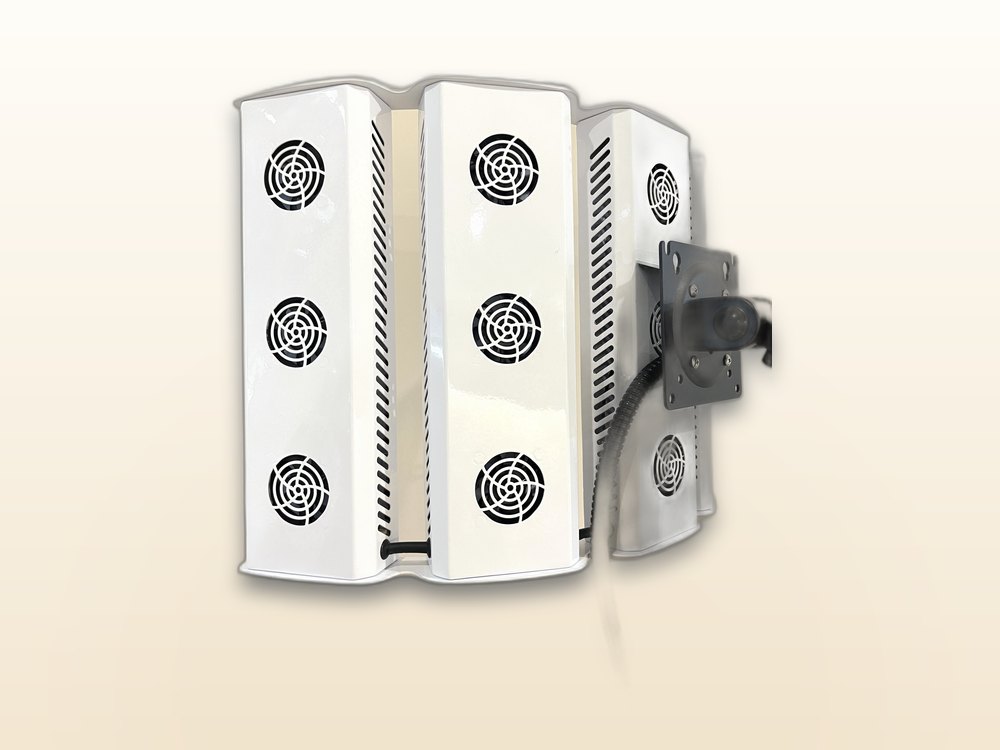
Because optical power density drops rapidly according to the inverse-square law as distance increases, positioning the LED array cleanly 8 to 15 cm above the nasal bridge ensures uniform radiant exposure across curved cheekbones, temples, and jawline simultaneously. Foldable 3-wing or 5-wing hinged canopies wrap laterally around the sides of the face so lateral cheeks and jawline receive equal irradiance without shadowed corners.
Always fit snug opaque blackout eye shields over the client’s eyes prior to energizing high-brightness 415 nm blue or 633 nm red panels—preventing retinal photostress and maximizing client relaxation.
6. Contraindications & Photosensitivity Screening
While LED photobiomodulation is non-thermal and safe for nearly all ages and skin tones, screen out clients with porphyria, systemic lupus erythematosus, active photo-triggered epilepsy (avoid pulsing/strobing modes; select continuous wave), or active use of strongly photosensitizing oral drugs (amiodarone, hydrochlorothiazide, tetracyclines) unless cleared by a physician.
7. Photobiomodulation Biphasic Dose Response & Avoiding Over-Treatment
In clinical photobiology, the Arndt-Schulz Biphasic Dose Response curve demonstrates that more exposure time is not always better: exceeding optimal energy density (typically 20–60 J/cm² per session depending on wavelength) plateaus cellular cytochrome c oxidase stimulation rather than accelerating collagen synthesis further. On a 415nm 633nm 830nm medical LED photobiomodulation panel delivering 60–100 mW/cm², strict 15- to 20-minute timed programs achieve maximal mitochondrial ATP upregulation safely. Train salon estheticians to keep canopy wings precisely 10 cm from the cheeks, remove reflective metallic jewelry or mineral zinc sunscreen completely before lighting the panel (zinc oxide reflects therapeutic light away from the dermis!), and sanitize transparent acrylic splash guards weekly using alcohol-free optical wipes so dust never clouds LED emitters.
8. Integrating Multi-Wavelength LED Canopies Into Scalp & Body Recovery Menus
Beyond facial erythema calming, articulate the hinged LED canopy cleanly over parted thinning hairlines using combined 633 nm red and 830 nm near-infrared light to boost scalp follicle microcirculation alongside head-spa oxygen mists, or position the canopy over post-waxing bikini zones and back-acne extractions to double room utilization passively.
Integrating LED Photobiomodulation With Every Salon Tier
Whether paired after deep hydro-extractions, microcurrent lifting, or chemical peels, scheduling an automated 15-minute 633 nm + 830 nm LED canopy recovery block elevates perceived treatment luxury while protecting fragile skin barriers against post-visit redness.
Device Care, Cooling Fan Ventilation & Multi-Year Reliability
Because medical SMD LED arrays operate at high radiant flux during back-to-back 20-minute salon appointments, keeping rear canopy cooling vents unobstructed and wiping aluminum heat-sink louvers free of dust monthly ensures consistent wavelength stability over tens of thousands of hours. Train staff never to fold articulated canopy arms forcefully past mechanical stop hinges when rolling units between treatment rooms.
Client Consultation & Membership Retention Messaging
Educate salon guests during skin consultations that photobiomodulation operates cumulatively like physical fitness training—a single 20-minute red and near-infrared LED exposure calms acute redness immediately, while twice-weekly sessions over 6 to 8 weeks steadily elevate fibroblast collagen density and calm breakout-prone skin. Bundling unlimited monthly LED canopy access inside VIP facial memberships transforms off-peak studio bed hours into predictable recurring revenue.
Clinical Integration, Product Architecture & Pillar Reference
Scale hands-free salon recovery and acne phototherapy with the flagship VENUS High-Irradiance LED Phototherapy Panel or compact tabletop Mini T-Bio LED Photodynamic Unit. Learn how to bundle LED recovery sessions into every facial tier inside our salon treatment menu SOP profit builder guide.
Frequently Asked Questions (Salon & Clinical)
Why combine 415nm, 633nm, and 830nm in a medical LED photobiomodulation panel?
415 nm blue light destroys acne bacteria in the epidermis, 633 nm red light stimulates dermal fibroblasts and collagen synthesis, and 830 nm near-infrared light penetrates deep to calm post-procedure inflammation and accelerate tissue repair.
Should sheet masks be worn under an LED phototherapy panel?
Only transparent clear hydrogel or clear serum layers should be worn during LED illumination; thick opaque white creams or clay masks block light photons from reaching target skin cells.
How fast does a commercial LED PDT panel pay for itself in a beauty salon?
Because LED panels operate completely hands-free with zero consumable cartridges, selling $35–$55 post-facial add-ons or monthly LED glow memberships typically recovers equipment investment within 2 to 3 months.