Salon Peak-Season Playbook: Holiday Client Planning
MAKGRAC Salon Editorial TeamUpdated October 20, 20266 min read
The real peak-season failure isn’t a lack of clients — it’s clients arriving and the salon not being able to hold them: calendars explode, therapists burn out, trial cards go out with no follow-up, and the moment the season ends it’s quiet again. According to iiMedia Research’s 2025–2026 study of China’s beauty and hairdressing industry, the market reached RMB 431.8 billion in 2024 and is forecast at RMB 445.9 billion in 2025, and the industry consensus is that peak-season traffic is an amplifier for the whole year: handled well, your annual membership base steps up a level; handled badly, it just drains your therapists and your equipment. This article delivers an executable plan: the four peak occasions → countdown checklist → capacity math → pricing references → pitfalls.
1. The Four Peak Occasions: Different Clients, Different Needs
Party season (November–January): office clients arrive with a hard “look-good” deadline, wanting fast, visible brightening, firming and condition management. Decisions are quick and tickets can run higher.
Wedding season (mainly spring–summer; start 3–6 months ahead): the bride, the bridesmaids and both mothers are three distinct client layers, with needs running from rescue treatments to systematic skin management — a naturally multi-person sales occasion.
School holidays (July–August, January–February): students plus accompanying parents, with concentrated demand for acne care and oil-control cleansing. Price-sensitive but rhythmically consistent — the window for building a young client base.
Season changes (March–April, September–October): sensitivity and dryness dominate; hydration-repair services move in volume and suit a trial-card push.
2. The T-6-Week Countdown: A Peak-Season Checklist
Run it backward, with a concrete deliverable for every item:
T-6 weeks: set the plan. Fix the lead service lines and the campaign structure (traffic / profit / retention layers); produce materials and scripts in parallel. Reference: skin management facial card programs.
T-5 weeks: stress-test the schedule. Calculate maximum daily capacity from current devices and staff (method below). Never let campaign volume exceed 110% of capacity — if it does, cut the offer, not the standard.
T-4 weeks: pre-book loyal clients. Targeted callbacks and presale — members lock slots first. That is both guaranteed revenue and a genuine “slots are filling” signal to new clients.
T-2 weeks: rehearse the flow. New staff finish full service drills. Peak season is not the time for new devices or new processes — only for making existing ones fluent. Training method: the 30-day path in salon device training SOP.
T-0: receive the traffic. Every new walk-in gets a baseline record (skin photos and assessment) — the raw material for converting peak traffic into year-round members.
3. Capacity Math: The Calculation You Must Run Before Peak Season
Max daily capacity = treatment beds × operating hours per day ÷ average time per client × device availability.
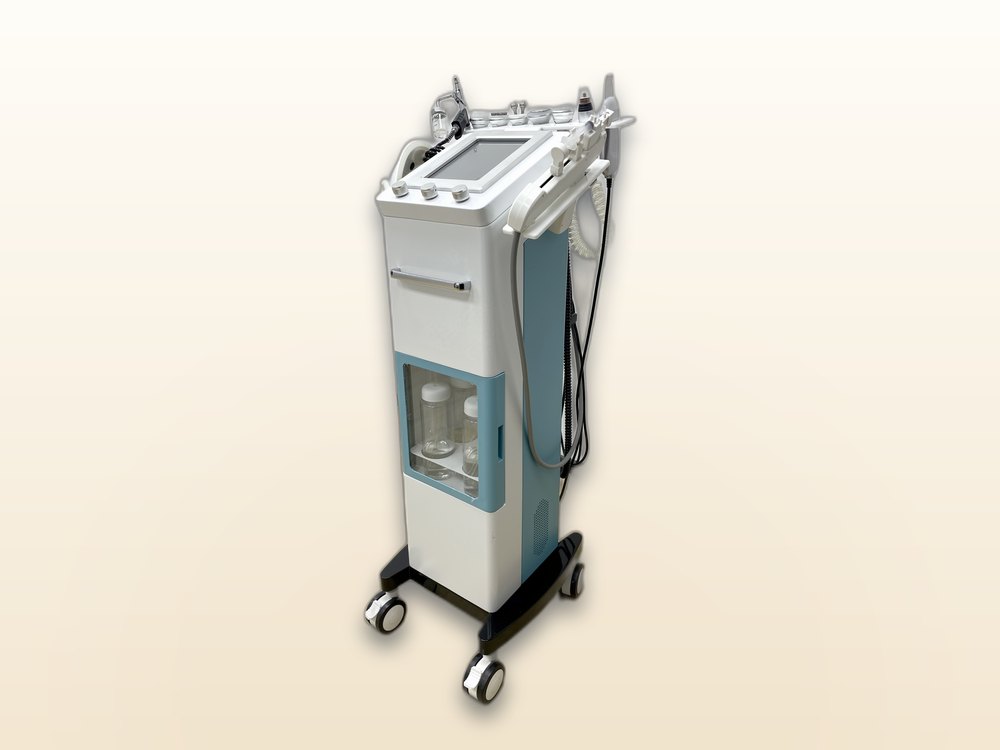
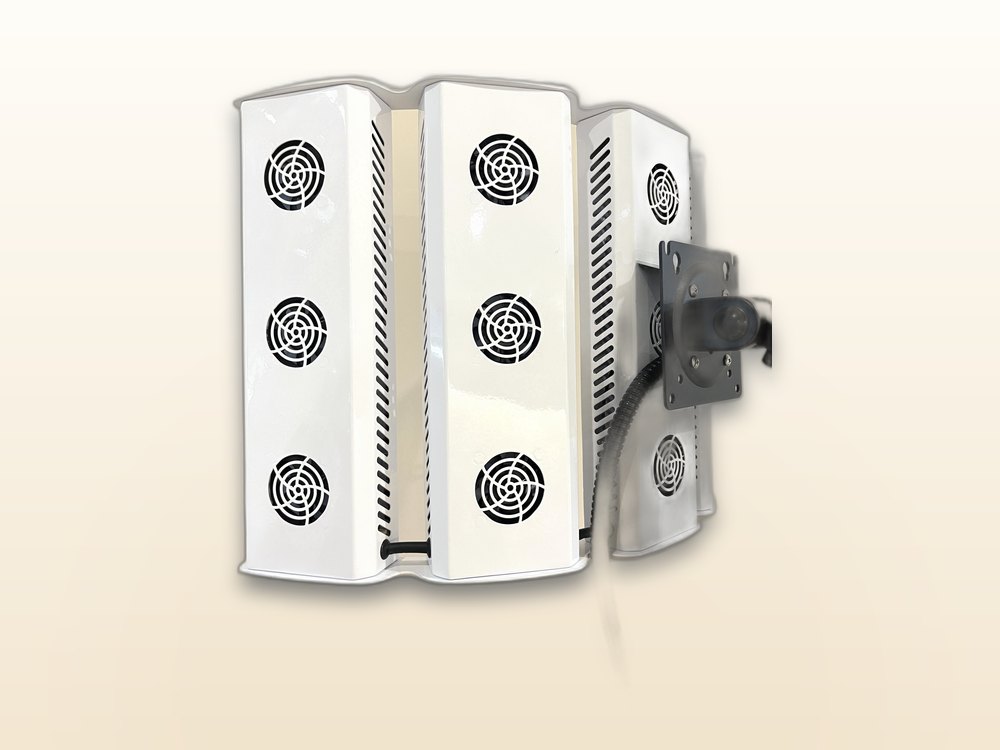
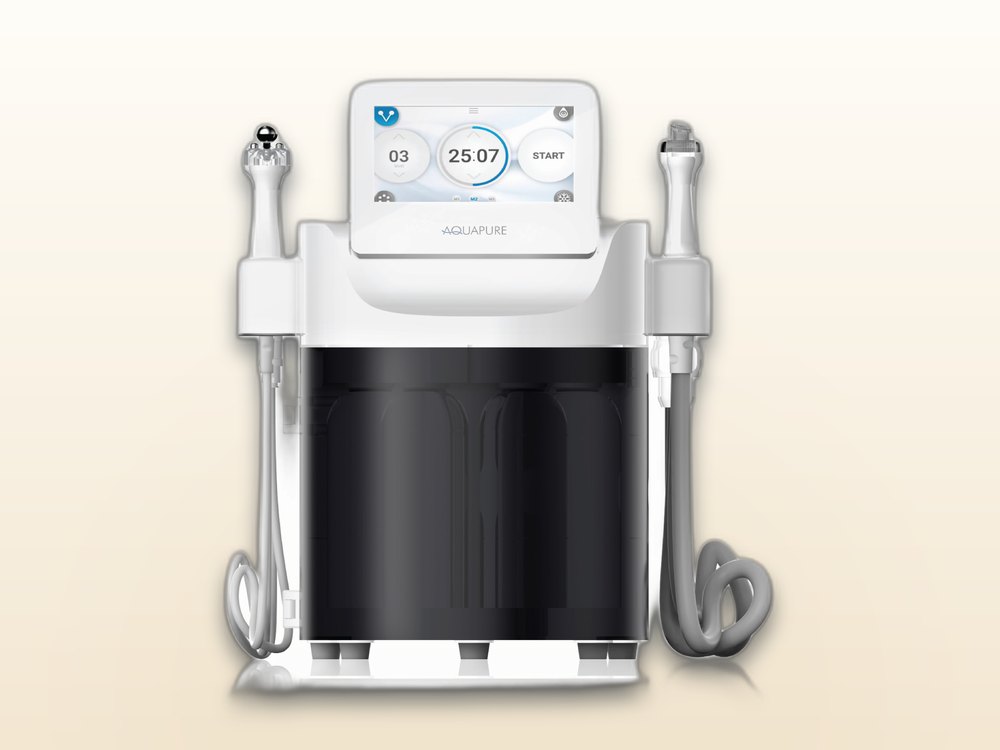
Three points to get right. First, the bottleneck is usually the lead device, not the beds — cleansing programs lean on the Aqua Touch Peeling hydro-facial device, while an all-in-one unit like the Oscar skin management system can carry cleansing, infusion, repair and light therapy in one chair, which is scheduling gold. Second, design LED services as parallel services: with a MINI T-BIO multi-band unit for acne-prone skin care or a five-band LED panel for post-treatment recovery (see LED phototherapy programs), the therapist serves the next client while the client rests under the light — per-head output doubles. Third, complete device maintenance before the season: losing a lead machine mid-season costs you double (see hidden costs of beauty equipment purchasing).
4. One Table: Occasion × Program × Pricing × Conversion Move
Occasion
Lead program
Market pricing reference
Conversion move
Party season
Brightening + firming package
RMB 680–1,980 per package
Plant annual-card benefit at final session
Wedding season
Bride protocol (3–6 sessions)
RMB 1,980–5,800 per protocol
Bridesmaid/family group rate
School holidays
Acne-care session card (8–12 sessions)
RMB 980–2,980 per card
Student price + pre-semester review renewal
Season change
Hydration-repair trial card
RMB 99–299
File created at trial; session-card follow-up within 7 days
These are common publicly observable market reference ranges; actual prices vary widely by region and positioning — defer to local salon pricing. For the life-beauty scope and device setup of acne care, see acne treatment programs; for the fall-winter window in detail, see fall & winter salon programs.
Limitations & Disclaimer
5. Pitfalls and Boundaries
No ultra-deep discounts in peak season: when the discount cuts into profit, you reach season’s end with “big revenue, no profit growth.” The right peak-season moves are locking slots and lifting tickets — not cutting prices to inflate volume.
Keep acne care in life-beauty scope: offer cleansing, oil control and LED blue-band care as improvement services; refer moderate-to-severe acne clients to medical care and accept no “cure” commitments.
Don’t overpromise “fast results”: party-season clients want rescue, and “condition improvement” is fair to say — results vary by individual. “One session, new face” talk is how complaints start.
Build slack into staff rosters: continuous overload buys you falling service quality and resignations. Schedule at 90% of full capacity.
Create every new client’s file the same day: the action most often dropped in peak season is record-keeping — without a baseline, post-season follow-up has nothing to stand on.
6. FAQ
Q: How far ahead should peak-season preparation start?
A: At least 4–6 weeks — about 2 weeks for the plan and capacity math, 1–2 weeks for member presales to lock slots, and 2 weeks before launch for process drills. A poster hung one week out cannot carry a peak season.
Q: How do I calculate my salon’s maximum capacity?
A: Beds × operating hours ÷ time per client × device availability. The bottleneck is usually the lead device, not the beds; designing LED services as parallel services raises output per therapist.
Q: How do I run peak-season campaigns without hurting profit?
A: Three layers — a modest trial card for traffic, packages and protocols to lift tickets, and annual-card benefits for retention. Discounts go only to member presales and first visits; never a store-wide low price.
Q: How do peak-season new clients become year-round members?
A: Baseline skin records and assessment on day one, a follow-up call with a cycle plan within 7 days, and a loyal-client renewal offer as the season closes. Conversion comes from process, not luck.
Q: Is the student segment worth targeting specifically?
A: Yes, but on cycle logic: acne care runs 8–12 sessions per care cycle, so a summer break completes roughly one full cycle. Pair student pricing with a pre-semester review, and you are converting the next 3–5 years of clients.
Final Thoughts
Peak season is an exam the year gives you only a few times — and the answers are all written in the preparation before it starts. For occasion-specific programs, capacity math and equipment configuration advice, contact us — MAKGRAC provides end-to-end support from equipment selection to peak-season execution.
MAKGRAC SALON & SPA KNOWLEDGE HUB
Professional Salon Protocols, Aesthetic Business Insights & Treatment Science
Practical operating guides, client consultation scripts, ROI calculators, and clinical device workflows curated for modern aesthetic salons, medspas, and premium skin management studios.
Salon Phototherapy Buyer's Guide: Choosing the right light-based equipment determines both your treatment room safety and your monthly membership retention. Compare MAKGRAC’s...
How pairing 500–600nm narrowband DPL with 900–1800nm Near-Infrared Milk Light delivers zero-downtime glass-skin brightening and collagen toning in salons.
Field-tested consultation scripts and consultative frameworks for salon estheticians to convert single visits into high-ticket device packages with clinical authority.
Explore the clinical and commercial differences between picosecond and nanosecond Q-switched lasers for salon pigmentation correction and tattoo removal.
A financial guide for salon entrepreneurs: comparing third-party distributor equipment leasing against direct manufacturer purchasing to eliminate debt and preserve cash flow.
Discover why multi-function hydra-dermabrasion and oxygen facial machines serve as the ultimate low-barrier client acquisition engine for modern aesthetic salons.
A complete operational blueprint for launching a profitable Japanese and Korean head spa: essential water circulation equipment, scalp micro-cameras, and menu pricing...
An in-depth technical and commercial comparison of monopolar and multipolar radiofrequency systems for aesthetic studios: thermal penetration depth, client comfort, treatment pricing,...
A comprehensive 2025 buyer's guide for salon owners and estheticians: comparing 808nm vs triple wavelengths, TEC sapphire contact cooling, power outputs, shot...
Equip Your Beauty Salon or Skin Management Studio with MAKGRAC
Explore factory-direct pricing, zero-consumable high-frequency devices, and comprehensive aesthetic training programs designed to maximize your treatment room revenue.