The Science of Light-Tissue Interaction in Pigment Lesions
Pigment removal—ranging from benign epidermal freckles and solar lentigines to deep dermal melasma and multicolored decorative tattoos—is one of the most clinically demanding yet profitable services an aesthetic clinic or medspa can provide. The fundamental laser physics rely on the principle of selective photothermolysis: matching the laser wavelength to melanin or ink absorption spectra while keeping the pulse duration shorter than the chromophore’s thermal relaxation time (TRT).
However, the evolution from nanosecond Q-Switched Nd:YAG to picosecond lasers has revolutionized clinical outcomes, drastically reducing the risk of post-inflammatory hyperpigmentation (PIH) and cutting treatment courses in half.
Picosecond Photomechanical Shockwave vs. Nanosecond Photothermal Heating
| Parameter | Picosecond Laser (Pico) | Q-Switched Nd:YAG (Nano) | Clinical Significance |
|---|---|---|---|
| Pulse Width | 300 – 450 Picoseconds | 5 – 20 Nanoseconds | Pico pulse is nearly 1000x faster than nano |
| Tissue Damage Mechanism | Photo-Acoustic Shockwave (Mechanical) | Photo-Thermal (Heat Conduction) | Minimal collateral thermal damage with Pico |
| Pigment Fragmentation | Pulverized into fine microscopic dust | Shattered into larger gravel-like pieces | Fine dust is eliminated 2x faster by macrophages |
| Tattoo Removal Sessions | 3 to 5 treatments for clearance | 8 to 12 treatments for clearance | Halves client treatment duration |
| Safety on Darker Skin (IV–VI) | Exceptionally safe; minimal thermal buildup | Moderate risk of hyperpigmentation / hypopigmentation | Pico enables treatment of diverse skin tones |
The Hollywood Carbon Peel (China Doll Facial) Protocol
Beyond tattoo removal, both Q-Switched and Pico lasers excel at performing the coveted Carbon Peel Facial. By applying an organic carbon mineral paste into pores and vaporizing it with a 1064nm beam, the acoustic energy exfoliates the stratum corneum, shatters epidermal melanin, and purges sebaceous gland congestion. It delivers instant radiance, tightens enlarged pores, and controls sebum with zero social downtime.
Revenue Potential: Pigment & Tattoo Removal Service Packages
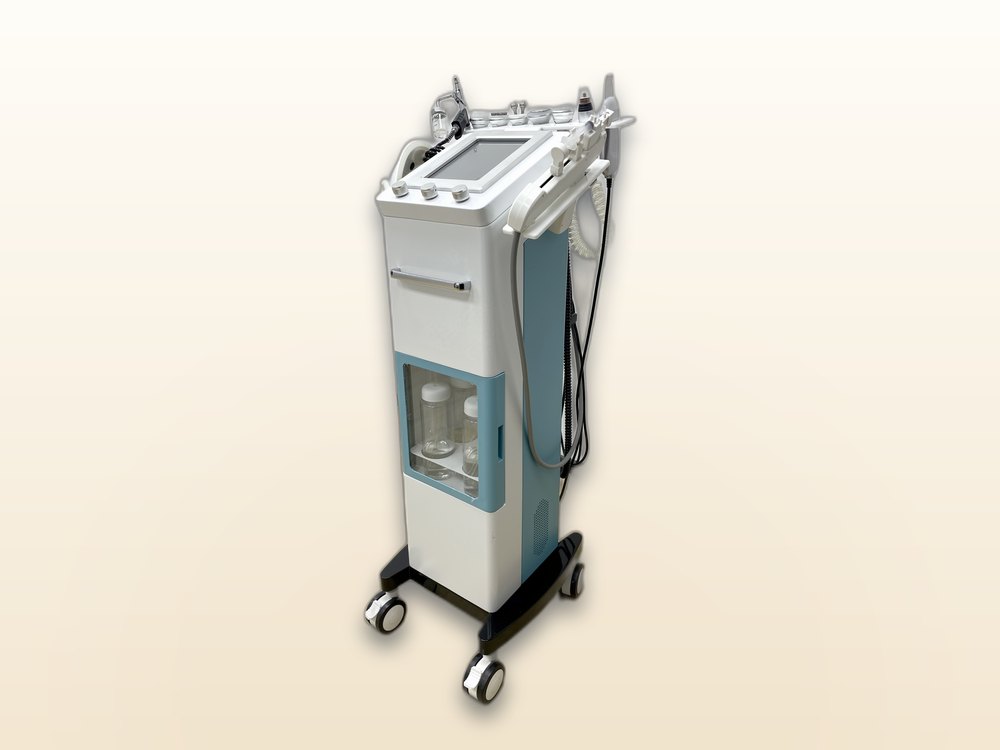
Medspas utilizing MAKGRAC picosecond workstations price single tattoo removal sessions between $150 (small 2×2 inch design) and $600 (large chest/sleeve sections). Carbon peeling facials command $180 to $280 for a 45-minute treatment. With average equipment operating costs below $5 per session, picosecond platforms rank among the highest-margin assets in modern clinical aesthetics.